Loading...
Serving Hemet, CA and surrounding areas. (951) 439-3325
Hemet Masonry is a licensed masonry contractor serving Moreno Valley, CA, handling foundation repair, concrete block walls, brick masonry, and tuckpointing for homeowners across the city's older and newer neighborhoods. We understand the clay soil conditions, the 100-degree summer heat, and the building stock - most of it built between 1980 and 2005 - that make masonry work in Moreno Valley different from a coastal job.
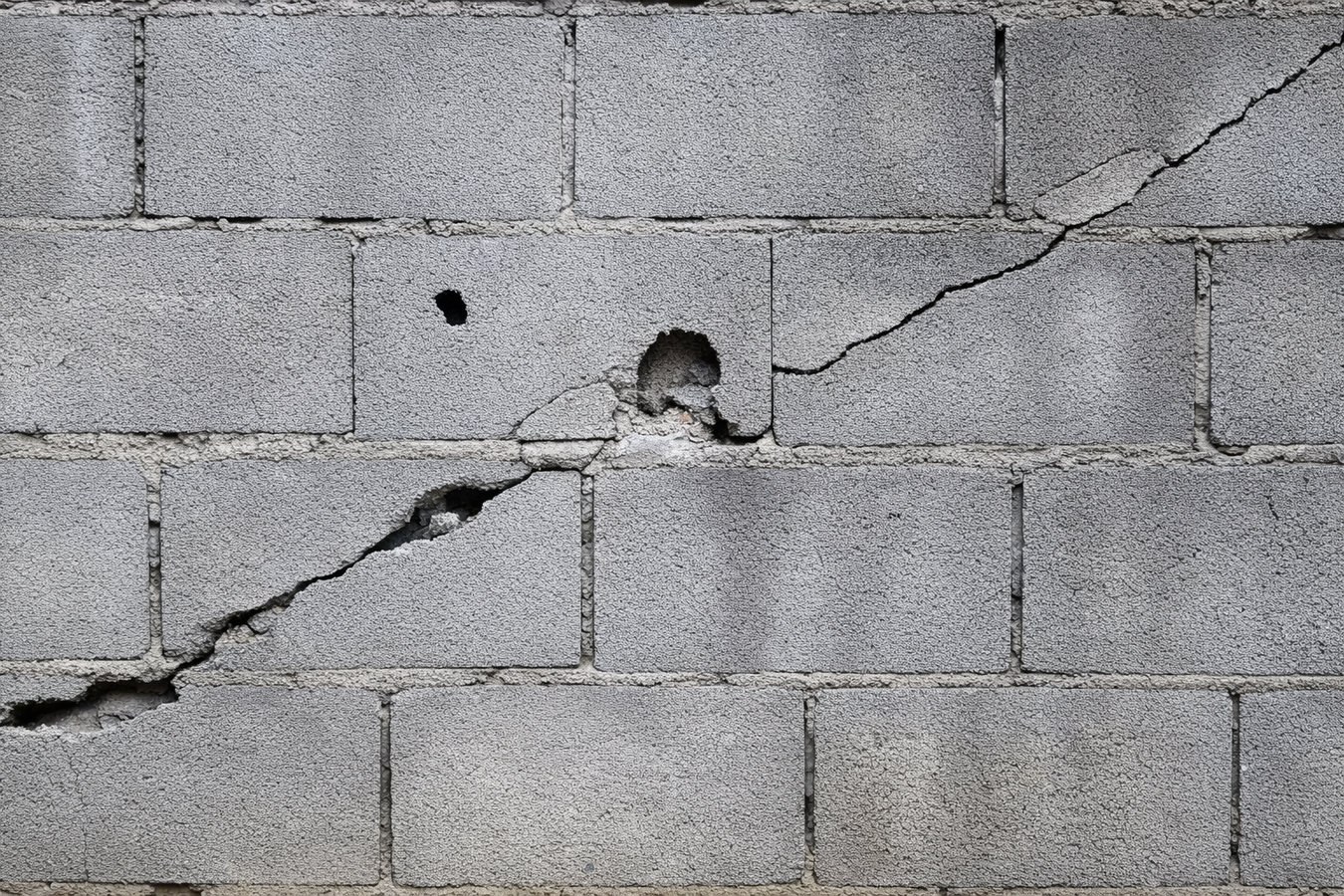
Most Moreno Valley homes were built on concrete slabs during the rapid growth of the 1980s and 1990s. The clay soil here swells and shrinks with the seasons, and by 20 to 40 years old many of those slabs have voids forming beneath them, causing uneven floors and diagonal cracks around door frames. Learn more about our foundation repair services.
Block walls are the standard perimeter fence in Moreno Valley neighborhoods, and most of the ones built during the city's 1980s-to-2000s growth period are now showing cracked caps, spalling mortar, and shifted sections from decades of soil movement and heat. Repairs catch these problems before a wall section fails entirely.
Moreno Valley averages around 35 days per year above 100 degrees, and that sustained heat dries out mortar joints faster than in cooler climates. Open mortar joints on brick or block structures let water in during the wet winter months - tuckpointing before that happens is one of the most cost-effective masonry repairs available.
Homes in the older western neighborhoods near March Air Reserve Base and along the Sunnymead corridor have brick mailboxes, chimneys, and decorative walls that have taken years of heat, frost cycles, and Santa Ana wind exposure. Spalled bricks and crumbling mortar need to be addressed before water gets into the wall assembly.
Newer neighborhoods in eastern Moreno Valley - including Rancho Belago - often have sloped rear lots and tiered yards that need retaining walls to stay stable. The clay soil here requires proper drainage behind the wall or wet-season pressure will push it forward over time.
Concrete walkways in Moreno Valley crack and heave over time as the clay soil shifts beneath them. Replacing a cracked, uneven walkway with a properly set concrete or paver path solves the safety hazard and improves curb appeal on homes where the original flatwork is past its useful life.
Moreno Valley grew fast. Affordable housing drew families from Los Angeles and Orange County through the 1980s, 1990s, and early 2000s, and the city built out in large tract subdivisions across the valley. The result is a housing stock where most homes are between 20 and 45 years old - right in the range where concrete foundations, block walls, and brick structures start showing the cumulative effects of heat, soil movement, and time. Summer temperatures regularly hit 100 degrees or higher, and the clay-heavy soils under most of the city expand every wet winter and contract every dry summer - a cycle that stresses masonry and concrete far more than most homeowners realize until something cracks or shifts.
Santa Ana wind events arrive each fall and early winter, with gusts that can reach 50 to 70 mph - enough to loosen tile roofs, crack poorly mortared block walls, and damage exterior masonry that was already showing wear. Homes in the older western part of the city near March Air Reserve Base often have the oldest foundations and the most deferred masonry maintenance. Newer homes in eastern Moreno Valley are larger and better built but have more concrete flatwork and bigger block wall perimeters that need periodic attention as they age into their second decade.
Our crew works throughout Moreno Valley regularly, and we pull permits through the City of Moreno Valley Building and Safety Division for structural masonry and foundation work that requires city review. The homes we work on here are mostly single-story and two-story single-family houses - stucco exteriors, concrete tile roofs, and slabs that were poured during the boom years of the 1980s and 1990s. We know what the soil does to those slabs over time, and we account for it in every estimate.
Getting around Moreno Valley is straightforward once you know the layout. Alessandro Boulevard and Perris Boulevard are the main east-west and north-south corridors, and most of the city's neighborhoods spread out from those. The older neighborhoods sit west of the 215 freeway, closer to March Air Reserve Base, while the newer subdivisions - including Rancho Belago - are on the east side of town. The Lake Perris State Recreation Area sits just south of the city and is a landmark most residents know well. We have worked on homes throughout every part of town and understand the difference in soil conditions and foundation age between the western and eastern sides of the valley.
We also serve homeowners in Perris just to the south - another fast-growing Inland Empire city where the same clay soil and heat conditions apply - and Beaumont to the east along the I-10 corridor.
Reach out by phone or through our contact form and we will respond within 1 business day to schedule an in-person walkthrough. Foundation and masonry problems in Moreno Valley vary enough that an accurate quote requires seeing the site.
We walk your property, check the foundation, block walls, or other masonry, and give you a written estimate that itemizes materials, labor, and any permit fees. We explain what we found and why we recommend what we recommend - no pressure, no vague line items.
For structural repairs that require a city permit, we file the application before the crew arrives on site. Permit processing in Moreno Valley typically takes a few days to a week. You stay informed throughout - no surprises on the start date.
When the work is done, we walk the finished project with you and hand over all permit documentation and any warranty terms in writing. For foundation repairs, we explain what signs to watch for in the first season after the work is complete.
We serve older neighborhoods near March Air Reserve Base and newer streets out in Rancho Belago - all of Moreno Valley. Free on-site estimates. No obligation.
(951) 439-3325Moreno Valley is one of the largest cities in Riverside County, with a population of around 210,000 people. It sits in the Inland Empire at roughly 1,600 feet elevation in a valley surrounded by the San Bernardino Mountains to the north. The city incorporated in 1984 and grew rapidly as affordable housing drew families from coastal Southern California. The result is a city made up almost entirely of single-family tract homes - mostly single-story ranch and two-story suburban styles with stucco exteriors and tile roofs, built in large subdivisions across the valley floor. The western side of the city, near March Air Reserve Base, has the city's oldest housing stock, while eastern neighborhoods like Rancho Belago are newer, larger homes built in the 2000s and 2010s.
The Sunnymead Boulevard corridor runs through the middle of the city and is the main commercial and residential spine that most longtime residents recognize. The Moreno Valley Mall sits near the center of town and has been a gathering point for the community since it opened in 1992. We serve homeowners all across the city - from the older streets off Alessandro Boulevard to the newer cul-de-sacs in Rancho Belago. We also serve neighbors in Perris, which shares the same clay soil conditions and similar housing stock just to the south.
Build a reliable foundation block wall from the ground up.
Learn MoreFrom older neighborhoods near March Air Reserve Base to the newer streets in Rancho Belago, Hemet Masonry serves all of Moreno Valley. Call or submit the form and we will respond within 1 business day.