
Loading...
Serving Hemet, CA and surrounding areas. (951) 439-3325
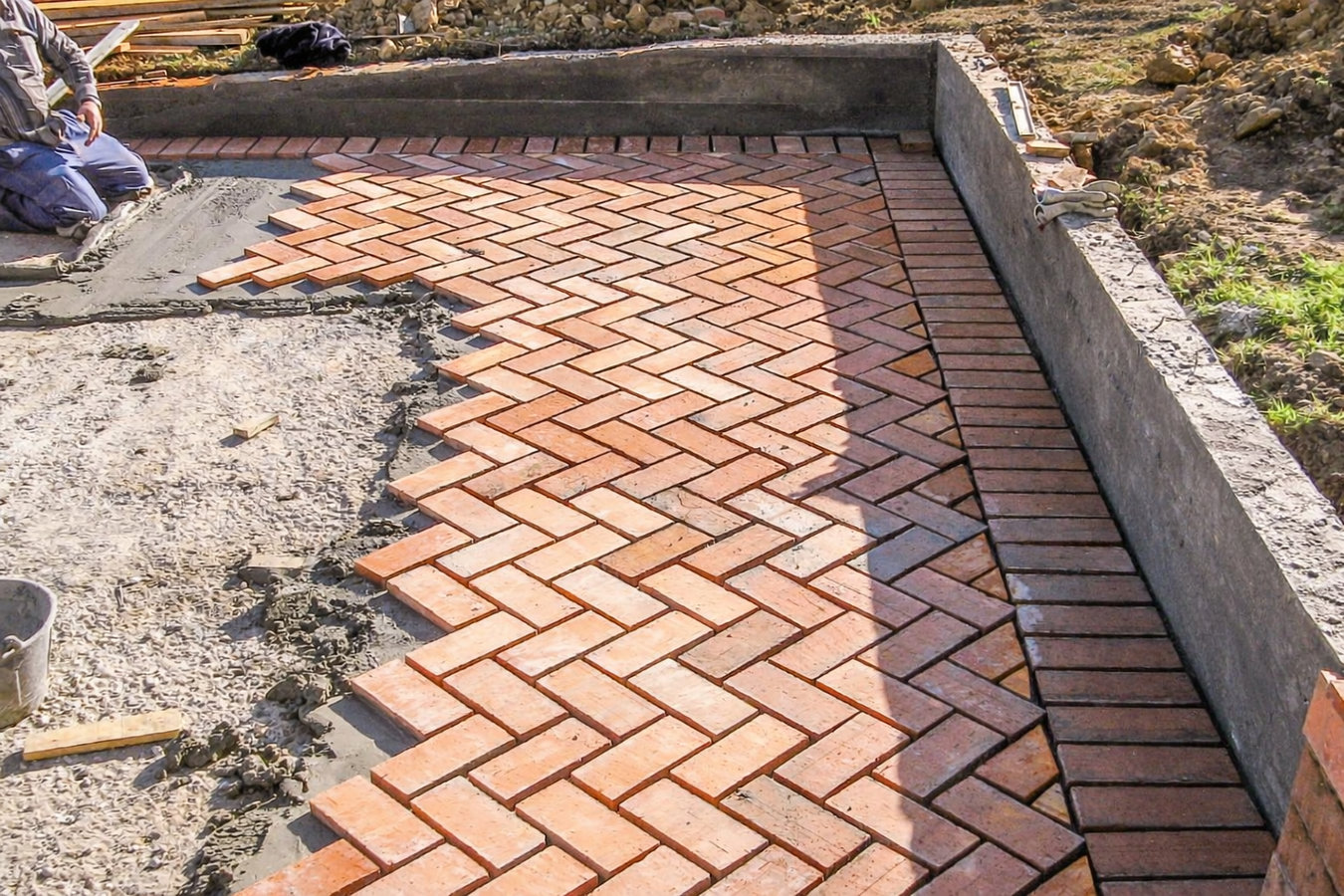
Hemet clay soil destroys walkways that were not built for it. We dig the right base, grade for drainage, and lay concrete, brick, or stone that holds up through years of dry summers and wet winters.
Walkway construction in Hemet means excavating the soil, packing a stable gravel base, and installing your chosen surface - concrete, brick, or natural stone. Most residential walkway projects take one to three days of active work, plus several days of cure time for concrete before foot traffic. The City of Hemet does not require a permit for most simple residential walkways, but your contractor should confirm this before work begins.
The biggest threat to walkways in this area is Hemet's expansive clay soil, which swells when wet and shrinks when dry. That movement is what breaks the surface - not age, not weather. A path built without adequate base depth and compaction starts cracking within a few years regardless of how good the surface material is. If you are also planning a driveway connection or parking area near your new path, our driveway pavers service can be incorporated into the same project to keep site disruption to a single visit.
Drainage matters just as much as the surface material. A path sloped even slightly toward your foundation directs rainwater toward your home after every storm. Every walkway we install is graded to move water away from the structure - a detail that protects your foundation for decades and is far cheaper to get right the first time than to fix later.
If your walkway has cracks you have patched before and they keep reopening, the base underneath has failed, not just the surface. In Hemet, the clay soil expands and contracts with the seasons, and once the base starts moving, patching the top is only a temporary fix. At some point, a full replacement is more cost-effective than repeated repairs.
Walk slowly along your current path and notice any spots that shift slightly when you step on them or sound hollow. This means the material has separated from the base below, which creates a tripping hazard that will only get worse. This kind of settling is common in Hemet homes on expansive soils, especially in neighborhoods that are 20 or more years old.
After a rainstorm, watch where the water goes. If it collects near your entryway or along the edge of your house, your walkway may be sloped the wrong direction or have low spots that trap water. Over time, this pushes moisture toward your foundation - a much more expensive problem than a new walkway.
If the top surface of your concrete walkway is flaking off in thin layers or looks pitted, the surface has started to break down. In Hemet's climate, years of intense sun and occasional winter freezes can accelerate this process. Once spalling starts, it tends to spread, and the rough surface becomes a hazard for bare feet and a place where weeds take hold.
We build walkways in poured concrete, brick, flagstone, and concrete pavers. Poured concrete is the most common choice in Hemet - it is durable, cost-effective, and sets up quickly. We score control joints at regular intervals so the slab has a place to flex without cracking randomly, and we use mix ratios appropriate for the heat here rather than a generic residential spec. For homeowners who want more character in a front entry or garden path, brick set in a mortar bed offers a classic look that also holds up well in this climate. Natural flagstone and irregular stone paths require more labor to install but create a high-end finish that works particularly well in hillside or landscaped yards. If your project connects to an existing patio, driveway, or entryway, we can match the material and finish so the whole area reads as one cohesive space.
Every walkway project starts with base preparation: excavation to the right depth for local soil conditions, a compacted gravel layer, and a final grade check before anything goes on top. This step is what separates a walkway that lasts 25 years from one that needs replacing in five. For projects that include a new brick wall installation alongside the path - a common combination for front yard curb appeal projects - we can build both as part of a single mobilization to reduce cost and timeline. The Interlocking Concrete Pavement Institute publishes installation standards that inform how we approach base depth and edge restraint for paver and stone walkways.
Suits homeowners who want a clean, low-maintenance path at a reasonable price - the most common walkway type in Hemet's residential neighborhoods.
Suits homeowners who want a traditional look with individual brick units set in mortar, particularly popular for front entries and garden paths.
Suits homeowners who want a high-end, custom look using irregular or cut stone - ideal for landscaped or hillside yards where the material adds character.
Suits homeowners who want the look of individual units with easier repair access down the road, since individual pavers can be lifted and reset if a section settles.
Two conditions in Hemet break walkways faster than anywhere on the coast. First, the San Jacinto Valley sits on clay-heavy soil that swells in wet winters and shrinks during the long dry summers. That movement tears apart a walkway built with a thin or poorly compacted base. Experienced local contractors dig deeper, use a thicker gravel layer, and may recommend a jointed design that allows for slight ground movement without surface cracking. Second, Hemet regularly sees summer temperatures above 100 degrees, and that extreme heat causes freshly poured concrete to dry too fast on the surface while the interior is still curing. This leads to surface cracking within weeks of installation - not years. Scheduling a pour for early morning and using curing blankets or misting during warm months is standard practice for experienced crews working here, not an optional upgrade. Homeowners in San Jacinto face the same soil and heat conditions as Hemet and benefit from the same approach.
Hemet also has a significant share of HOA-governed communities, particularly in planned neighborhoods and retirement developments. Many of these associations have specific requirements about walkway materials, edge treatments, and colors. A contractor familiar with the local HOA landscape can flag potential conflicts before work begins rather than after. Homeowners near Menifee share similar HOA prevalence in newer master-planned developments, so the same upfront design review process applies when working across the valley.
We ask a few basic questions - roughly how long the walkway is, what material you are considering, and whether there is an existing path to remove. We schedule an in-person visit because a walkway quote done by phone without seeing the site is rarely accurate. You will hear back within one business day.
We walk the area with you, check the slope, look for drainage concerns, and note anything that could affect the job - tree roots, sprinkler lines, proximity to property lines. You receive a written estimate that breaks down what is included. This is the right time to ask about base preparation and how we handle Hemet's soil conditions.
If a permit is needed, we handle the application with the City of Hemet Building Division before any work begins. Once permits are confirmed as required or unnecessary, you get a start date. Most residential walkway projects are scheduled within one to three weeks of signing.
The crew removes any existing material, excavates, compacts the base, and installs your surface. For concrete, control joints are scored before we leave. After curing - typically 24 to 48 hours for foot traffic - we do a final walkthrough together to confirm everything matches what was agreed to in writing.
Written quote, no sales pressure. We know Hemet soil and we build paths that last.
(951) 439-3325Most walkway failures in this valley trace back to a base that was not dug deep enough or compacted properly. We spec the base depth and gravel layer for the actual soil conditions on your property, not a generic residential standard. That is the single biggest factor in how long your walkway lasts.
Every walkway we install is graded to move water away from your foundation. In a valley where heavy rain events can follow months of dry weather and the ground cannot absorb water quickly, a path that drains toward your house is a real risk. Correct drainage is built in from the start, not added as an afterthought.
We check with the City of Hemet Building Division before work starts and handle any required applications for you. Walkways that needed permits but skipped them can create problems during a future home sale. You should not have to navigate that process yourself - it is part of how we do the job.
We have been working in Hemet and the surrounding San Jacinto Valley since 2017. That means we know which neighborhoods have the most active clay soils, where HOA requirements tend to be stricter, and what the City of Hemet building office typically requires for residential masonry work. Local knowledge matters in a project like this.
A walkway is not a complicated project, but getting it wrong means cracking, water damage, or a permit problem that surfaces years later. We build them the right way from the start so you do not have to think about it again. Verify our California contractor license on the CSLB website before you hire anyone for this kind of work.
Permanent brick walls for privacy, property boundaries, or raised planters - built with proper footings for Hemet's clay soils.
Learn MorePaver driveways that handle Hemet's heat and soil movement better than plain concrete, with a range of material and pattern options.
Learn MoreFall and early spring book fast in Hemet - contact us now to lock in your start date before the schedule fills.